Intelligent Robotics:

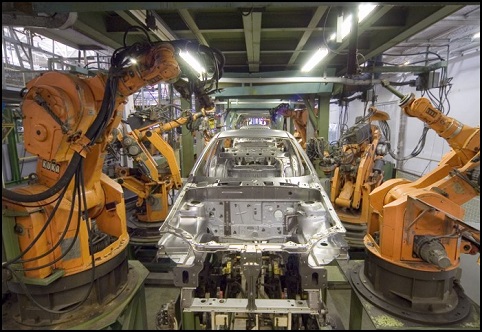
Industrial robots have been developed to perform repetitive tasks in a structured environment, which means that the task is clearly and precisely known by the robots, no variables exist so that the task is fully predictable and the consequences of the robot action are predictable too. The next step is to have robots performing a variety of tasks in a human environment, which is unstructured and dynamic. In order to operate in such environment robots need to acquire the information, learn continuously, make decisions and react appropriately to unanticipated circumstances; they have to become “intelligent”.
INTELLIGENT ROBOTICS (IR) > 1. Industrial and Collaborative Robots

INTELLIGENT ROBOTICS (IR) > 1. Industrial and Collaborative Robots

Human-Robot Collaboration proposes the cooperation between human workers and “intelligent” production systems. The combination of the potentialities of human (flexibility, critical thinking) and robots (precision, reliability) allows new automated production lines useful in a wide range of fields.
INTELLIGENT ROBOTICS (IR) > 2. Sensors, Actuators and Control Systems

INTELLIGENT ROBOTICS (IR) > 2. Sensors, Actuators and Control Systems

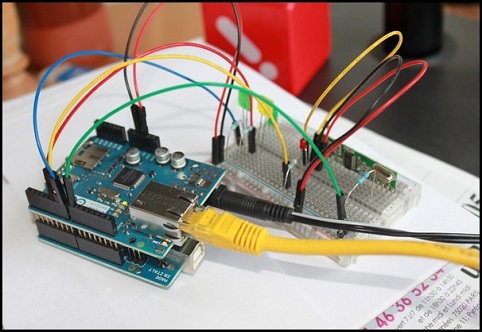
In order to cope with imperfect knowledge intelligent robots have to rely on sensors to perceive and acquire knowledge about the unstructured environment, and on actuators and control systems to perform their tasks with no damage to the surrounding objects and people.
INTELLIGENT ROBOTICS (IR) > 3. Advanced Robotics

INTELLIGENT ROBOTICS (IR) > 3. Advanced Robotics

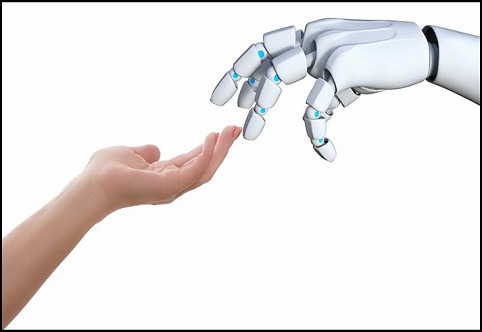
Advanced Robotics focuses on novel robotic components and technologies, to provide the robots with superior perception, integrability, adaptability and mobility, toward fully autonomous mobile robotic systems able operate not only in the unpredictable human environment but beyond that in hazardous and harsh environments such as nuclear plants, underwater and space.